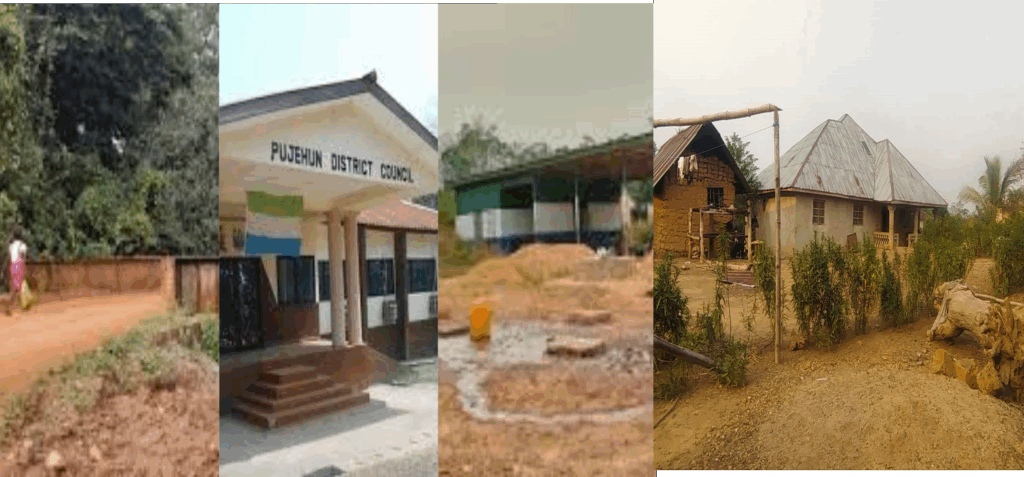
Pujehun, situated in the southern region of Sierra Leone, is known for its remote and predominantly rural character. This district is distinguished by its rolling hills, expansive farmlands, and river valleys that provide both beauty and a foundation for subsistence agriculture. Pujehun’s relative isolation from urban centers presents both opportunities and challenges for its inhabitants. While the district’s seclusion helps preserve its cultural traditions and natural landscapes, it also limits access to critical infrastructure and services. The population of Pujehun is largely composed of smallholder farmers and local traders. Despite economic hardships, there is a strong sense of community and resilience among its residents. Traditional leadership structures are well-established, and local councils often serve as the primary means for resolving disputes and organizing community life. This close-knit social fabric has been a critical asset in mobilizing community efforts, particularly in times of crisis or conflict.
Agriculture is the lifeblood of Pujehun’s economy. Residents primarily cultivate rice, cassava, and a variety of vegetables, which are essential for both local consumption and small-scale trade. However, the district’s economic potential is constrained by its limited access to modern agricultural inputs, technology, and transportation networks. These challenges are compounded by periodic disruptions in water supply and infrastructural deficiencies that hinder market access, making it difficult for farmers to achieve consistent productivity and improved livelihoods. Culturally, Pujehun is vibrant and dynamic. The district has a rich heritage of traditional music, dance, and storytelling that continues to play a central role in community gatherings and celebrations. Women, in particular, have a longstanding history of community activism, often spearheading initiatives for social change and local development. Despite this active participation, women in Pujehun still face systemic challenges, including limited educational opportunities, inadequate healthcare services, and insufficient legal support when confronting gender-based violence or economic exploitation. In response to these challenges, the Women’s Coalition in Pujehun is implementing a series of targeted interventions aimed at empowering local women and enhancing community resilience. Key initiatives include gender law awareness campaigns, community-based mediation programs, and leadership training sessions designed to equip women with the skills needed to advocate for their rights and participate in local governance. By strengthening local capacities and establishing robust support networks, the coalition works to create an environment where women in Pujehun can thrive, contribute to sustainable development, and play a central role in fostering peace and security.
WPSASL INTERVENTIONS:
• Gender law awareness campaigns (Devolution of Estate Act, GBV laws).
• Community training on gender rights & leadership .
• Peacebuilding dialogues in remote areas.
PUJEHUN DISTRICT WPS COALITION
Background of Pujehun District
Pujehun District is located in the Southern Province of Sierra Leone. It borders the Atlantic Ocean to the southwest and is bordered by other districts, including Bo District to the north and Kenema District to the east. The capital of Pujehun District is the town of Pujehun. The district is characterized by a mix of coastal areas, rivers, and hilly terrains. The main river in the area is the Sewa River, which plays a vital role in the local ecosystem and agriculture. Pujehun typically has a tropical climate, with a wet season and a dry season influencing the agricultural activities in the district.
Pujehun District is a district in the Southern Province of Sierra Leone. Pujehun District is one of the sixteen Districts of Sierra Leone. Its capital and largest city is the town of Pujehun in Panga Section where the District Council is located. The other major towns as Chiefdoms Headqaurter Towns in the district include Sahn Town, Zimmi Town, Jendema Town, Bandajuma Town, Bumpeh Town, Blama Town, Pejeh Town. Mano Town, Pehala Town, Gobaru Town, Masam Town, Karlu Town and Potoru Town. As of 2015, the district has a population of 345,577.
The population of Pujehun District is mainly from the Mende ethnic group, though minority ethnic groups are also found in the District. Pujehun District is a large Muslim majority district, though there is a significant Christian minority as well.
Agriculture is the lifeblood of Pujehun’s economy. Residents primarily cultivate rice, cassava, and a variety of vegetables, which are essential for both local consumption and small-scale trade. However, the district’s economic potential is constrained by its limited access to modern agricultural inputs, technology, and transportation networks. These challenges are compounded by periodic disruptions in water supply and infrastructural deficiencies that hinder market access, making it difficult for farmers to achieve consistent productivity and improved livelihoods. Culturally, Pujehun is vibrant and dynamic. The district has a rich heritage of traditional music, dance, and storytelling that continues to play a central role in community gatherings and celebrations. Women, in particular, have a longstanding history of community activism, often spearheading initiatives for social change and local development. Despite this active participation, women in Pujehun still face systemic challenges, including limited educational opportunities, inadequate healthcare services, and insufficient legal support when confronting gender-based violence or economic exploitation. In response to these challenges, the Women’s Coalition in Pujehun is implementing a series of targeted interventions aimed at empowering local women and enhancing community resilience. Key initiatives include gender law awareness campaigns, community-based mediation programs, and leadership training sessions designed to equip women with the skills needed to advocate for their rights and participate in local governance. By strengthening local capacities and establishing robust support networks, the coalition works to create an environment where women in Pujehun can thrive, contribute to sustainable development, and play a central role in fostering peace and security.
The secret to happiness lies in helping others.
Never underestimate the difference YOU can make
in the lives of the poor